The center consists of two laboratories:
Laser and Spectroscopy Laboratory:
This laboratory includes a large number of instruments and research systems dedicated to laser and spectroscopy research and their applications.
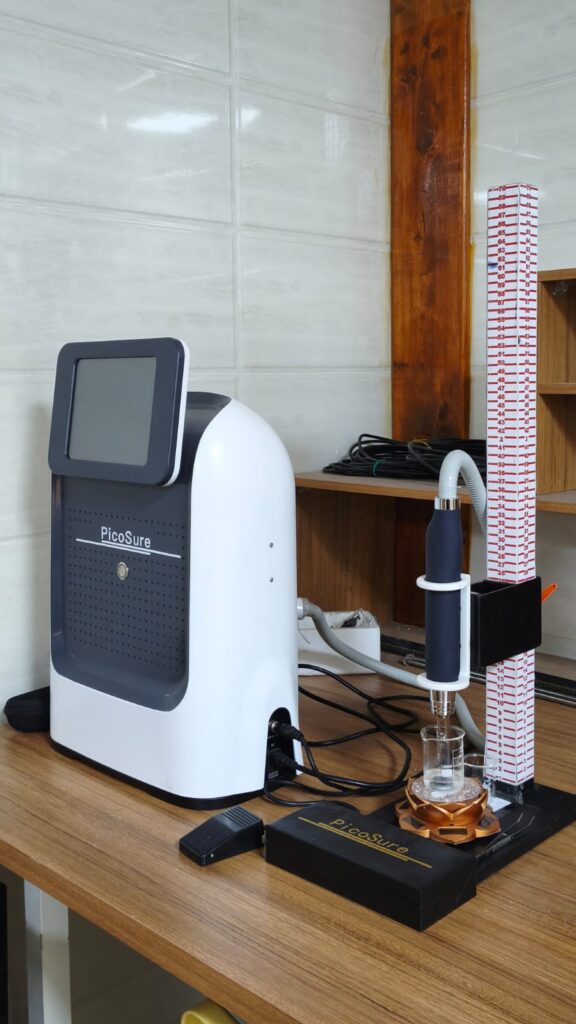
System for generating nanomaterials by laser ablation
At the Laser and Photonics Center at Al-Hamdaniya University, a pulsed laser ablation system for nanomaterial generation has been designed and successfully implemented. Pulsed laser ablation is a technique that employs high-energy, short-duration laser pulses to remove surface layers of materials or to fabricate precise geometrical structures by directing the laser pulses onto a designated target surface.
This technique is based on the interaction between the laser radiation and the surface of the target material, whereby the incident optical energy is converted into thermal energy, resulting in the evaporation and subsequent removal of the surface material. Pulsed laser ablation is widely utilized in various applications, including the surface modification and removal of layers from solid, soft, glass, biological, and electronic materials. In addition, it is used in the fabrication of high-precision geometrical patterns, drilling, engraving, micromachining, digitally controlled manufacturing processes, as well as numerous industrial and scientific applications.
Nonlinear Optical Properties Measurement System
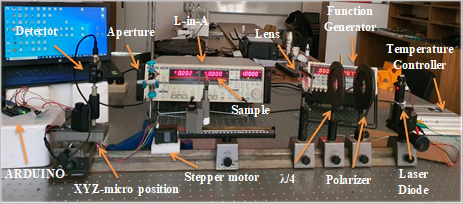
At the Laser and Photonics Center – University of Al-Hamdaniya, a system for studying the nonlinear optical properties of materials based on the Z-scan technique has been designed and implemented. The Z-scan technique is a simple and widely used experimental method for measuring the dependence of a material’s nonlinear optical response on light intensity and is employed for the characterization of optical materials. In this technique, the sample is translated along the z-axis, and the far-field intensity is measured as a function of the sample position.
Features:
1- Investigation of the nonlinear optical properties of materials.
2- Photodetector with a spectral response range of 200–1100 nm.
3- High-precision mechanical tools and components.
4- Optical table providing high system stability.
5- High-precision optical components.
The Laser Irradiation System
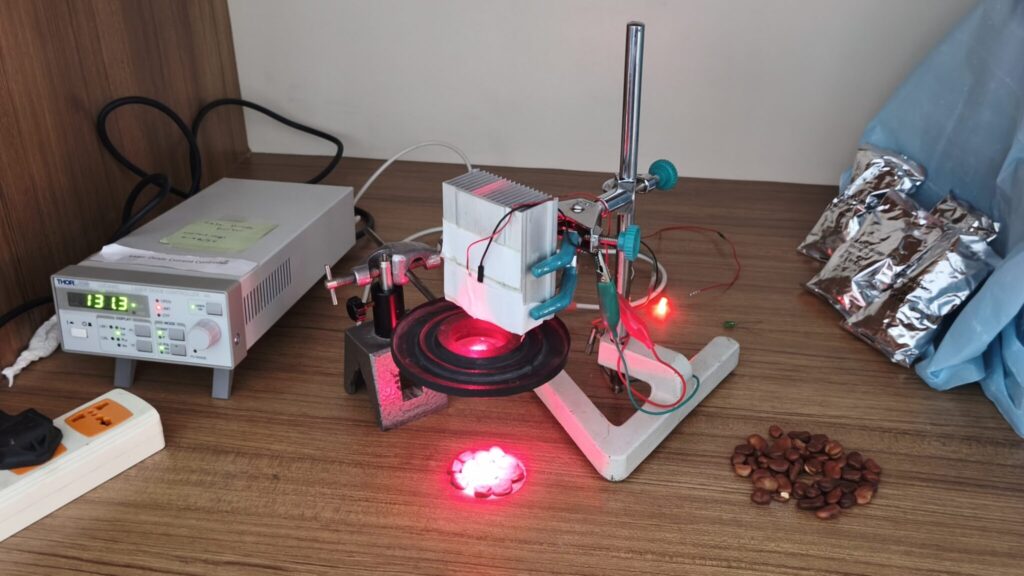
Laser irradiation systems are devices designed to direct a laser beam with a specified power and wavelength onto a selected sample, with the aim of investigating the effects of laser radiation on its physical, chemical, or optical properties. Such systems enable precise control over laser power, exposure time, and the illuminated spot area, thereby ensuring high accuracy and reproducibility in experimental investigations.
Optical Table
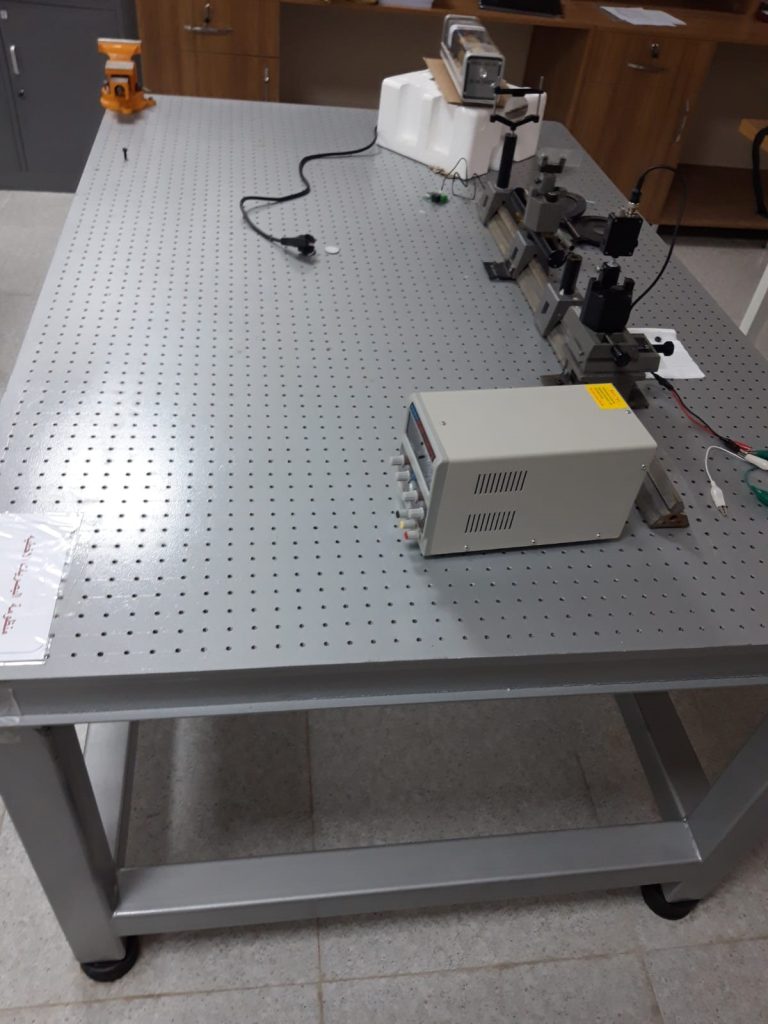
At the Laser and Photonics Center – University of Al-Hamdaniya, an optical table with international-standard specifications has been designed and fabricated. The table provides a solid and stable base for assembling high-precision systems used in vibration-sensitive laser and optical experiments. The surface of the table was designed to be highly rigid with minimal deflection, ensuring that the alignment of optical components remains stable over time.
Since most optical systems require vibrations of optical components to be extremely low, the optical table was designed to be very heavy, with a total weight of approximately 850 kg and dimensions of (15 × 180 × 120 cm). The surface of the optical table consists of a square grid of threaded holes in metric units, facilitating the mounting and alignment of optical components.
It is worth noting that this work was completed in one of the technical workshops in Bartella district, affiliated with Al-Hamdaniya District in Nineveh Governorate, at a cost significantly lower than that of purchasing a similar optical table from international manufacturers, as shown in the image below.
Mode-Locking Technique for Erbium-Doped Fiber Laser
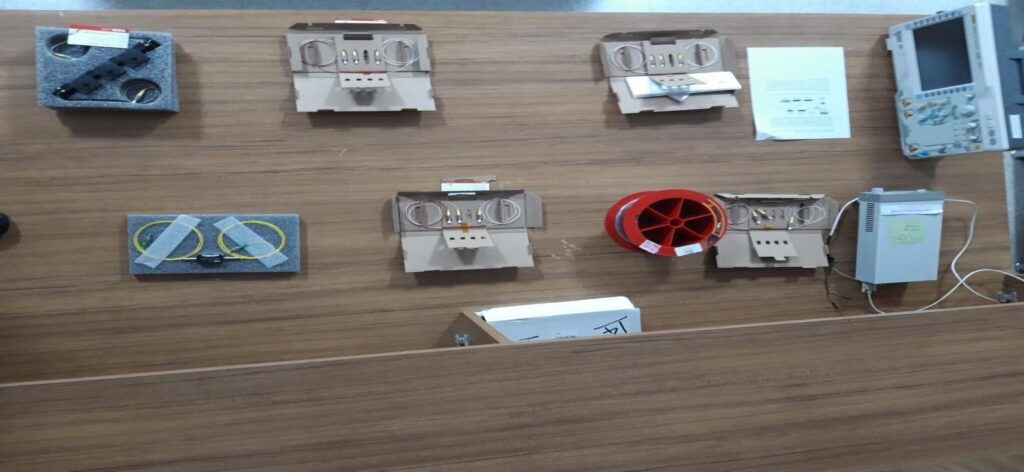
At the Laser and Photonics Center – University of Al-Hamdaniya, a mode-locking system was designed and implemented for an erbium-doped fiber laser, which falls within the specialized field of optics and laser technology. In this context, the term “mode-locking” refers to an operational state of the laser in which short pulses are generated without the need for an external modulation source.
It is well known that erbium-doped fiber lasers are capable of generating light in the infrared range, particularly at a wavelength of 1550 nm, which is widely used in various applications, including optical communications.
Sensing and Nanophotonics Laboratory:
The laboratory houses a wide range of instruments and research systems dedicated to laser and spectroscopy research and their applications.
Chemical Spray Pyrolysis System
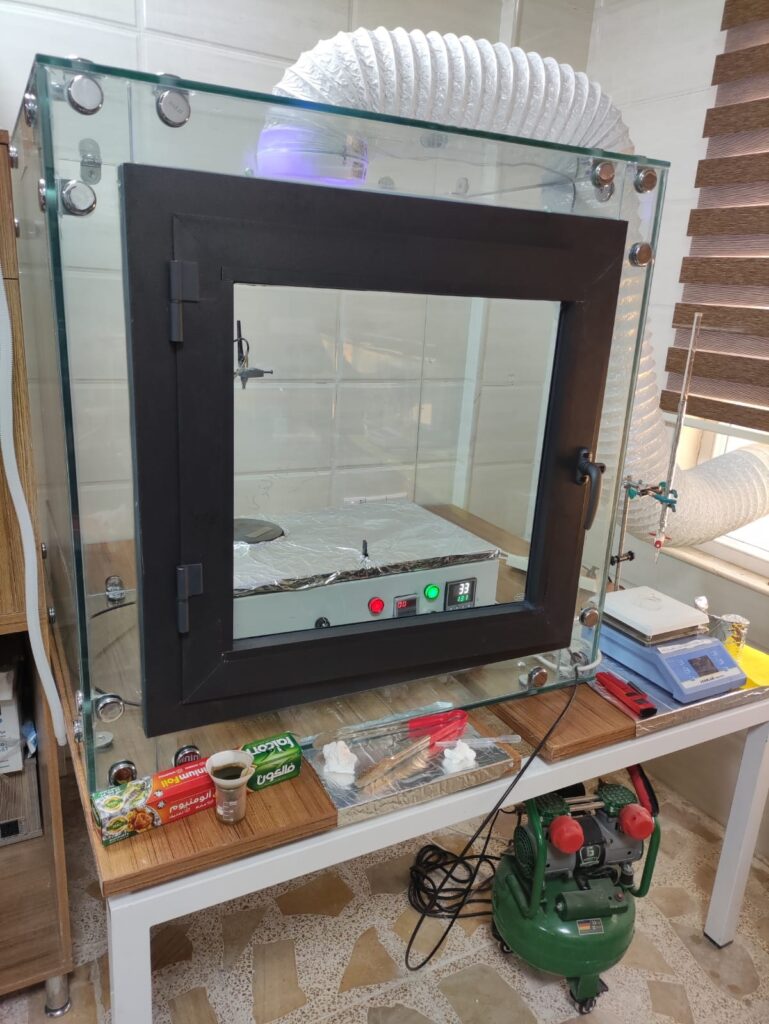
At the Laser and Photonics Center – University of Al-Hamdaniya, a chemical spray pyrolysis system has been designed and fabricated. Chemical spray deposition is considered one of the important and widely adopted techniques for the preparation of thin films, particularly in photovoltaic applications that require large-area thin-film coatings.
This method is distinguished from other techniques by its cost-effectiveness, due to low operating costs and the simplicity of the equipment used. It also enables the preparation of thin films over larger surface areas than those achievable by other methods. Moreover, the prepared films exhibit high stability in their physical properties over time.
Using this technique, thin films of compounds with high melting points— which may be difficult to fabricate using other methods—can be prepared. In addition, thin films composed of two or more mixed materials with.
Solar Energy Production System
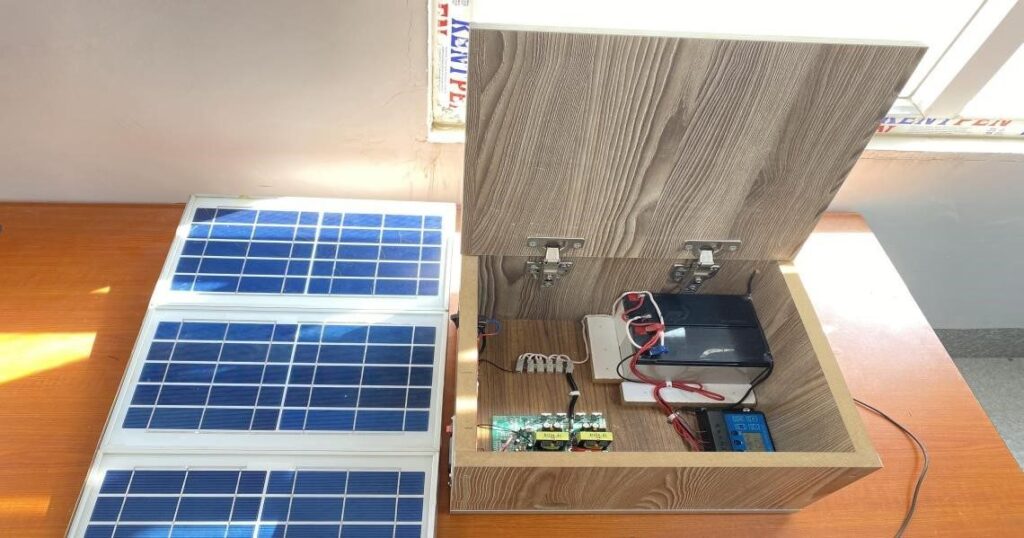
At the Laser and Photonics Center – University of Al-Hamdaniya, a system was designed for charging portable devices and for simple practical applications. The system consists of solar panels, a voltage rectifier, batteries, an inverter, a mobile phone charger, and a PWM-type charge controller.
The three solar panels were connected in series in order to increase the total output voltage of the solar array to more than 12 V, as a single panel produces approximately 5.54 V. A series connection was adopted instead of a parallel connection to increase the output voltage while maintaining a stable current value.